#1 Survey
Digital data collection Enhanced response ratesConfidential and anonymous
Gather data digitally via online surveys on any laptop, personal device etc. Enhance response rates.
Automates the collection and visualization of psychological safety information with your KPIs to future proof your organisation
Our measure identifies six key components of psychological safety which we link to organisational performance
Automates the collection and visualization of psychological safety information with your KPIs to future proof your organisation
Our measure identifies six key components of psychological safety which we link to organisational performance
Gather data digitally via online surveys on any laptop, personal device etc. Enhance response rates.
Analyse the 6 components: Speaking up, Listening, Enabling, Trust, Leadership, Decision making
Insights at different organisational layers, from Individuals up through Team, Division and Organisation
Highlight areas of excellence and challenges. Monitor organisational changes
Empower your organisation to respond to rapid changes in economic environments. e.g. Consumer demands, supply lines etc.
We can link your KPIs with our digital platform for in-depth insights. e.g. Sales, staff turnover, target deadlines, product errors etc.
"A sense of being able to show and employ one's self without fear of negative consequences"
Kahn, 1990
"A shared belief that a team is safe for taking interpersonal risks"
Edmondson, 1999
"A work environment where employees are safe to speak up without being rejected or punished"
Baer & Freese, 2003
Edmondson's Taxonomy of Archetypal Zones. Adapted from: Edmondson AC. Teaming: How Organizations Learn, Innovate, and Compete in the Knowledge Economy. John Wiley & Sons; 2012
It is important to assess current levels of psychological safety across your organisation to recognise areas of excellence/challenges
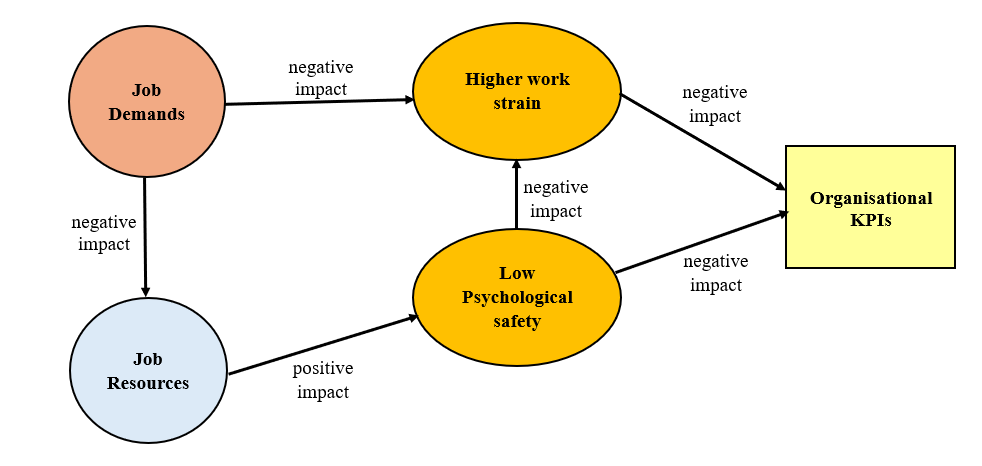
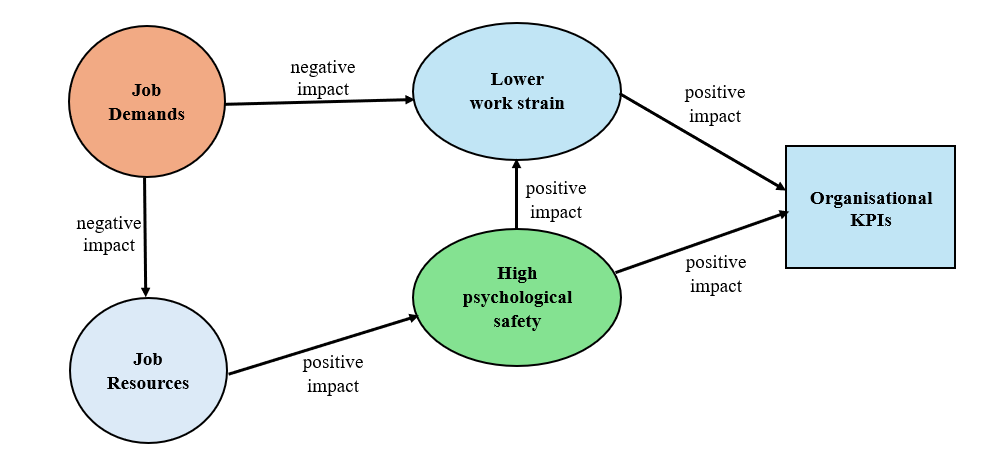
These figures illustrate the theory underlying the effect of psychological safety on job performance and output taking into consideration workplace demands/resources and work strain. Bakker, A. B., & Demerouti, E. (2007)
The two models illustrate the direct and indirect impacts of low/high psychological safety on work strain and organisational KPIs.
"Work strain is a form of stress that occurs when high job demands combine with low decision making, leading to adverse outcomes (Karasek, 1979)"Key components
Common causes
Common outcomes
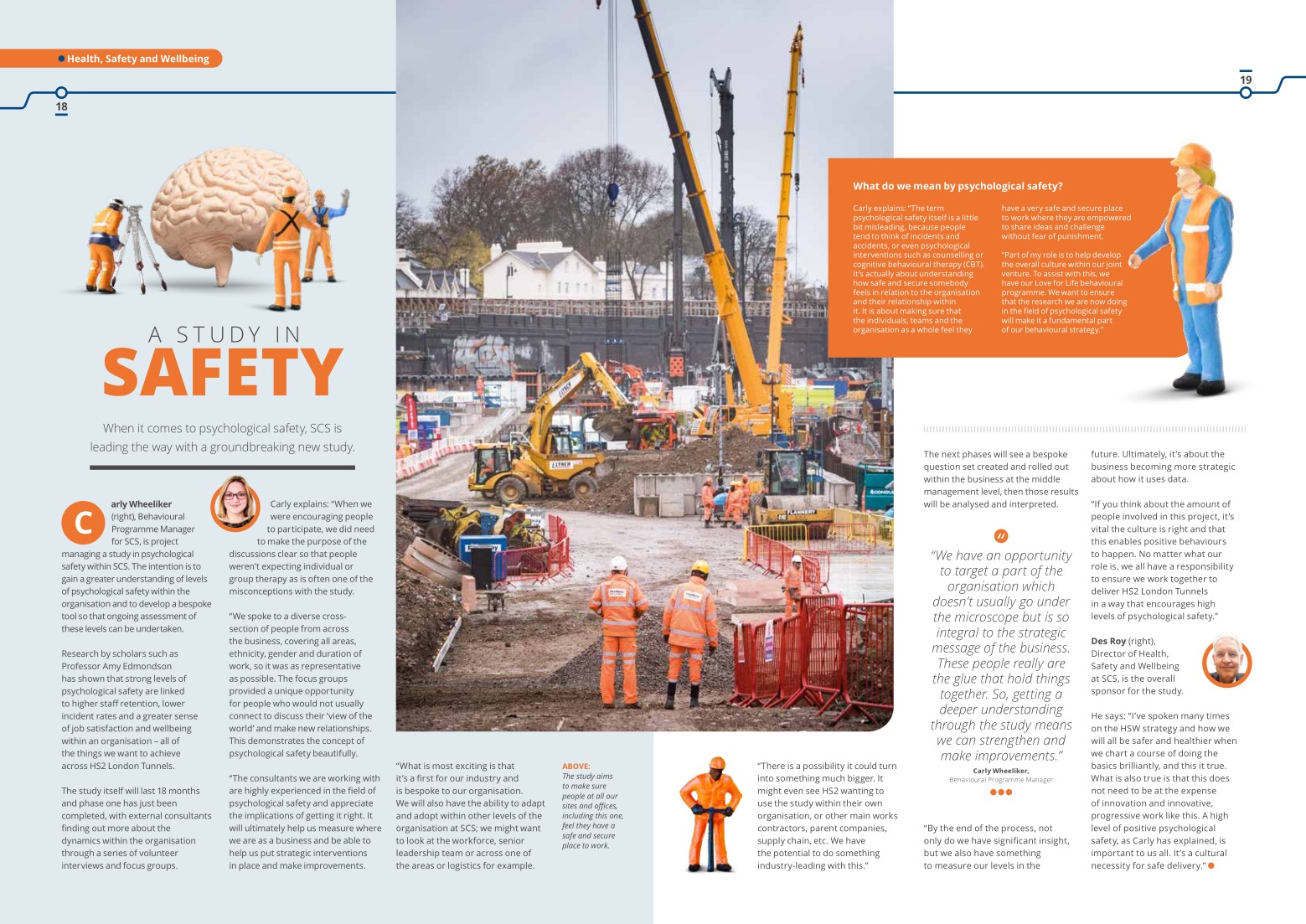
The project was featured in the Platform South magazine, the magazine produced by SCS Railways
"We have an opportunity to target a part of the organisation which doesn't usually go under the microscope but is so integral to the strategic message of the business. These people really are the glue that hold things together. So, getting a deeper understanding through the study means we can strengthen and make improvements."
Carly Wheeliker
Behavioural Programme Manager
© 2026 Psychological Safety Solutions Limited 12927736
Registered with the Information Commissioner's Office
